


Spring Valley: Farm Game
4.63.46K Reviews
App Specs
- Version
- 50.1
- Updated On
- License
- Free
- Downloads
- 10,000,000+
- Developer
- Playkot LTD
- Categories
- Adventure
- Platform
- Android, iOS
Screenshots




 Analysis by AppCompare
For a shared tablet or a quiet moment after dinner, I can see the appeal of a gentle farming game: it gives everyone an easy-to-understand little world to return to, without demanding the same kind of attention as a fast action game. Spring Valley: Farm Game is an adventure game from Playkot LTD, and its mix of growing crops, tending a farm and moving through quests makes it a natural fit for players who enjoy steady progress. I’d treat it as a personal game, though, rather than assume that several household members can safely share one farm or keep separate progress on the same device.
One device, different play habits
A realistic household routine might be a parent checking the farm during a short break, then letting a child take a turn later. The game’s straightforward farming rhythm makes that handoff easy to understand: plant, wait, harvest, and decide what to work on next. But a shared screen is not the same thing as separate accounts. Before handing over a device, I’d make sure everyone knows whose game they are playing and avoid treating another person’s progress or choices as disposable.
This is especially useful if one person likes arranging the farm while another prefers completing tasks. You can agree on a simple division—one player chooses where things go, the other focuses on the next objective—without turning a relaxing game into a competition. If that arrangement starts causing friction, taking turns in separate sessions is the safer household habit than making assumptions about shared saves or independent profiles.
Set expectations before spending or changing things
The game is free to download, but it includes optional in-app purchases ranging from $0.99 to $149.99 per item. That wide range makes a clear household rule worthwhile: decide in advance whether purchases are off-limits, require permission, or are handled only by the adult who manages the device. I would not hand a child a payment-enabled device on the assumption that every purchase prompt is harmless or that a purchase is needed to enjoy the basic farming loop.
There is also a practical boundary around time. Crops and goals encourage players to check back, which can make a quick visit turn into several small visits across a day. For a shared device, agree on when it is available and whether someone can move or rearrange the farm during another player’s turn. Those small expectations matter more than trying to optimize every harvest.
Make turns cooperative, not confusing
If several people want to try it, a household can use the quests as a shared talking point: one person can read the objective, while another chooses what to do next. That works best when players pause before spending scarce resources or making a layout change that someone else may have planned. I’d keep a simple verbal handoff—what is growing, what task is underway, and what not to move—rather than relying on memory after a long gap.
That coordination is useful for younger players too, because it turns the game into a chance to explain planning and patience without making every choice a lesson. Still, the game should not be treated as a family-management tool. The enjoyment comes from the farm itself; household rules about device access and purchases need to be handled separately.
Worth Reading Before You Choose

Flipboard Shows What News Apps Must Do Beyond the Feed

Switching to Android Auto Means Rethinking Your Driving Routine

Google Calendar Makes a Crowded Week Easier to Manage

Ludo King Makes the Most of the Minutes Between Plans

Baby Panda World Brings Quick Play to Modern Phones, but Its Game Library Feels Busy

ESPN’s Live Game View Makes Following Close Games Easier
Age context and trust
Spring Valley is rated Everyone, which makes its general presentation suitable for a broad audience, but age ratings do not replace an adult’s judgment about screen time, spending, or whether a child is ready to manage a game independently. I’d introduce it with a brief explanation of the purchase boundary and show younger players how to ask before tapping anything that could spend money. That keeps the conversation clear without making the game sound more complicated than it is.
The game is a better household choice when everyone is comfortable with a calm, progress-based activity. It is less suitable if you need strong separation between players, want a game with no purchase prompts, or are looking for a fast round that ends cleanly after a few minutes. In those situations, a simple offline puzzle or a game built around distinct local turns may be easier to manage.
What the farming loop feels like in everyday play
I find the farming loop most enjoyable when I treat it as a series of small check-ins, rather than expecting each visit to feel like a complete adventure. A useful habit is to choose one priority before tapping around—tend to what is ready, make progress on a quest, or simply enjoy planning the farm—so a short session stays relaxed. That everyday rhythm also makes it easier to decide whether the game’s gentler pace suits the way you like to play.
Welcome to Your Dream Farm
Imagine stepping into a vibrant world where the sun always shines, and the crops grow like there’s no tomorrow. Spring Valley: Farm Game welcomes you with open arms into a lush landscape filled with endless opportunities to cultivate the farm of your dreams. From the moment I started, I was hooked on the simple yet engaging premise of building and managing my own farm.
Getting Started
Starting out, you’re given a modest plot of land and a handful of seeds. The tutorials are clear and concise, guiding you through the initial steps of planting crops, feeding animals, and expanding your farm. It’s the kind of game that eases you in, ensuring you’re never overwhelmed by too many features at once.
That gentle onboarding is a strength if you are new to farming games, but I would still take a moment to read each instruction instead of tapping through quickly. Early guidance is where the game establishes what each action does, and learning that flow makes later decisions less trial-and-error. If you are sharing the device, this is also a good point to agree who is making the first choices, rather than letting the farm become a tug-of-war over its layout.
Building and Customization
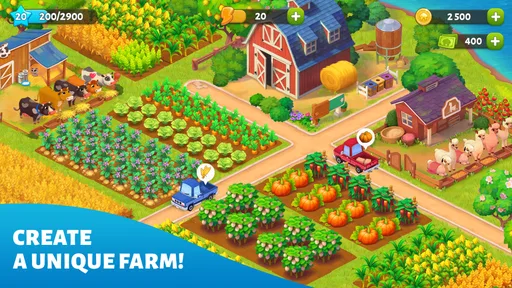
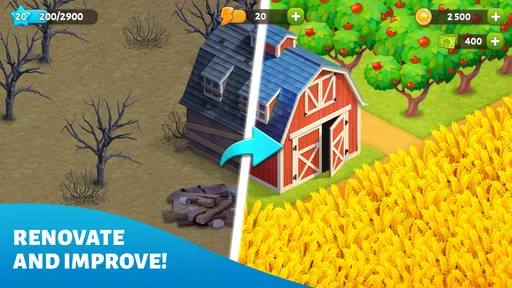
One of the standout features is the level of customization available. You can design your farm exactly how you want it. Want a neat row of apple trees lining your fields or a cozy barn surrounded by wildflowers? Go for it! The game encourages creativity, and I found myself spending hours just rearranging my farm to perfection.
My practical advice is to separate decorating from task-focused play. When I want to make progress, I would first handle the current farming priorities, then use a later session to rearrange things. That avoids repeatedly changing a layout while also trying to remember what needs attention. It is a small workflow choice, but it makes the game feel less scattered, particularly when you only have a short window to play.
The Joy of Farming
The core gameplay loop is delightfully simple: plant seeds, water them, and harvest the crops once they’re ready. There’s something incredibly satisfying about watching your hard work come to fruition. The more you play, the more crops and animals you unlock, keeping you engaged and eager to see what comes next.
This rhythm suits short check-ins better than a single long session. For example, I could open the game while waiting for a meal to finish, take care of what is ready, and leave the next steps for another time. It is not ideal if you want every session to deliver a complete, self-contained challenge; farming progress naturally involves waiting and returning. That’s a meaningful difference from puzzle games built around discrete levels or adventures that focus on continuous exploration.
Challenges and Quests
Besides the everyday farming tasks, the game spices things up with various challenges and quests. These are excellent for breaking the monotony and offer great rewards. Whether it’s helping a neighbor in need or preparing for a village festival, the quests add depth and keep you coming back for more.
When several goals compete for attention, I would use quests as a guide rather than a command to do everything at once. Pick the objective that sounds enjoyable, then check whether it fits the resources and time you have available. This keeps the game from feeling like a checklist. If you prefer a clear finish line every time you play, a quest can provide direction, but the wider farming routine is still open-ended enough that there may always be another task waiting.
Graphics and Sound
The graphics in Spring Valley: Farm Game are nothing short of charming. Bright, colorful, and full of detail, they make the game a pleasure to look at. The sound design complements the visuals perfectly, with soothing background music and the occasional chirp of a bird, creating a peaceful ambiance.
That relaxed presentation is part of why I would choose it for winding down, not for a burst of competitive excitement. If you like games that keep the screen busy with rapid action, the gentle pace and pastoral look may feel too soft. For players who want a calmer alternative to combat-heavy adventure games, though, the farm gives the genre a more domestic, routine-based shape.
Community and Social Features
No farm is an island! The game has a strong community aspect, allowing you to visit friends’ farms, trade items, and even participate in co-op events. It’s a great way to connect with fellow players and gain inspiration from their farm designs.
I would approach the social side as an optional extra rather than the reason to start playing. It can offer ideas for arranging a farm and make progress feel less solitary, but players who prefer to keep gaming private can still focus on their own routine. In a household, visiting other farms is also a useful way to see different approaches without changing the shared farm itself.
In-App Purchases
While the game is free to play, there are options for in-app purchases. These can speed up progress or unlock exclusive items, but they’re entirely optional. I found that with a little patience and planning, you can enjoy the full experience without spending a dime.
For anyone wondering whether paying is necessary, my answer is that the basic appeal is the gradual routine, so spending is most relevant if you personally value faster progress or particular extras. I would not buy something just because a task is taking time; first decide whether waiting is actually spoiling your enjoyment. The current version is 46.0, and the game has been available since April 7, 2022. It is free, with purchases offered separately, so checking the purchase boundary before a child plays is more useful than assuming the download itself settles the spending question.
Spring Valley has a 4.6 average from around 191,000 ratings, and it has passed 10 million installs, which suggests that its accessible farming approach has found a broad audience. It is rated Everyone and runs on operating systems from version 7.0 onward. Those details make it easy to consider for a wide range of devices, but they do not change the central fit question: do you enjoy returning to a farm and progressing at a measured pace?
In conclusion, Spring Valley: Farm Game is a delightful escape from reality. It’s perfect for unwinding after a long day and offers a rewarding experience for both casual and dedicated players. Whether you’re a seasoned farmer in the virtual world or a newbie looking for a fun pastime, this game has something for everyone. So, why not give it a try and see if the farming life suits you? Happy farming!
Pros
- Engaging storyline with immersive quests.
- Beautiful graphics and vibrant animations.
- Variety of crops and animals to manage.
- Regular updates with new content.
- Multiplayer mode enhances social interaction.
Cons
- Requires constant internet connection.
- In-app purchases can be expensive.
- Progress can be slow without purchases.
- Occasional bugs and glitches.
- Notifications can be overly frequent.
FAQs for Spring Valley: Farm Game
What is the main objective of Spring Valley: Farm Game?
In Spring Valley: Farm Game, the main objective is to build and manage your own farm. Players cultivate crops, raise animals, and complete various tasks to expand and upgrade their farm. The game combines elements of simulation and strategy, offering a relaxing yet engaging experience for players of all ages.
Is Spring Valley: Farm Game free to play?
Yes, Spring Valley: Farm Game is free to play, but it includes in-app purchases. These purchases allow players to buy in-game currency or special items that can enhance gameplay. While it's possible to enjoy the game without spending money, some features may be unlocked faster through purchases.
What platforms is Spring Valley: Farm Game available on?
Spring Valley: Farm Game is available on both Android and iOS platforms. Players can download the game from the Google Play Store or the Apple App Store, making it accessible to a wide range of mobile users. Ensure your device meets the game's system requirements for optimal performance.
Does Spring Valley: Farm Game require an internet connection?
Spring Valley: Farm Game requires an internet connection to download and update the game, as well as to access certain features such as events and social interactions. However, some basic gameplay elements might be accessible offline, but for the full experience, a stable internet connection is recommended.
Are there any social features in Spring Valley: Farm Game?
Yes, Spring Valley: Farm Game includes social features that allow players to connect with friends. Players can visit each other's farms, exchange gifts, and participate in cooperative events. These features enhance the community aspect of the game, making it more interactive and fun.


